


Manuel S. Enverga University Foundation (MSEUF) strengthened its contributions to research, community development, and public engagement in 2025 through initiatives addressing sustainable tourism, human rights, Indigenous Peoples' welfare, and access to essential services.
Through published research, participation in discussions on human rights and security, and collaboration with government agencies, the University supported the sharing of academic knowledge on issues relevant to public administration, community development, and inclusive governance.
These initiatives reflected MSEUF's commitment to connecting research and education with societal concerns and strengthening collaboration between higher education institutions, government agencies, and local communities.
Developing research-based recommendations for sustainable community tourism
On Aug. 2, 2025, Springer published the research paper "Assessing the Challenges of a Talaba Eco-Park and Exploring Opportunities as a Sustainable Community-Based Tourism Destination" in The Innovative Pathway on Sustainable Culture Tourism, under the Advances in Science, Technology & Innovation book series.
The study was authored by Maricel Herrera, Justine Bravo, Kristine Anne Castro, Mhay Nicole Gozo, Kylene Mharie Lagaras, and Nicolle Riego, all affiliated with the MSEUF College of International Hospitality and Tourism Management (CIHTM).
The research examined the conditions affecting the development of a Talaba eco-park in Quezon Province as a community-based tourism destination.
Using qualitative methods, including interviews and community cases, the researchers investigated local participation, community involvement in tourism activities, and management challenges affecting the eco-park's development.
The findings identified several concerns, particularly limited awareness of community-based tourism, financial constraints, and tourism management challenges.
Based on these findings, the researchers developed a tourism action plan intended for policymakers and decision-makers.
The proposed action plan addressed improvements to tourism facilities, policy implementation, community awareness, destination marketing, disaster management, and community development projects.
Through this research, MSEUF contributed evidence-based recommendations that may inform government and community stakeholders involved in sustainable tourism planning.
The published study establishes the development of policy-relevant recommendations. However, further documentation is needed to confirm whether these recommendations were formally presented to government officials or used in policymaking and capacity-building activities.
Contributing research to discussions on human rights and the security sector
MSEUF also submitted supporting documentation concerning participation in the 2025 Commission on Human Rights (CHR) Conference on International Humanitarian Law, themed "Human Rights and the Security Sector in the Dynamic 21st Century."
The conference was organized by the Commission on Human Rights through its Center for Social Justice and Humanitarian Protection, in collaboration with the Human Rights Promotion Office.
A certificate dated Aug. 15, 2025, recognized Hazel Ann Azoy for serving as a panelist or presenter during the conference at the Commission on Human Rights in Quezon City.
The certificate identified the presentation's abstract title as "The Impact of National Task Force to End Local Communist Armed Conflict (NTF-ELCAC) in the Selected Municipalities in Quezon Province."
The presentation addressed a policy-relevant subject involving government security initiatives and their implications for communities in Quezon Province.
The documented conference participation demonstrates engagement in a forum involving human rights and security-sector concerns.
However, the certificate does not specify the participant's institutional affiliation, the content of the presentation, the composition of the audience, or whether government policymakers received formal recommendations arising from the research.
Further institutional and conference documentation would establish the University's specific contribution to the event and its relevance to government education and policymaking.
Strengthening Indigenous community engagement through SAMA-SAYA
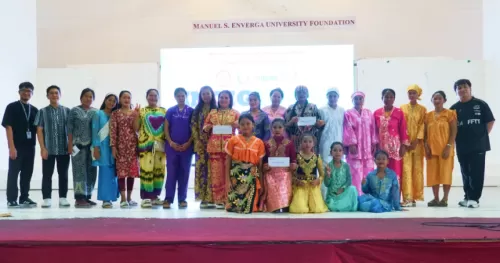
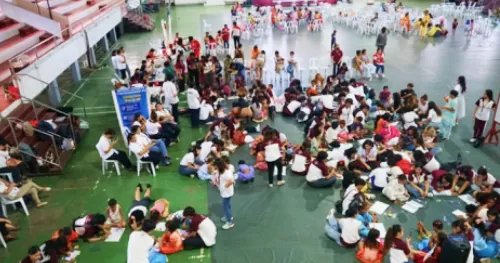
On Oct. 30, 2025, MSEUF, in partnership with the Department of Social Welfare and Development (DSWD) Field Office IV-A, conducted SAMA-SAYA: Sama-samang Saya Kasama ang Sama-Bajau ng Lucena at the University Gymnasium in observance of Indigenous Peoples Month.
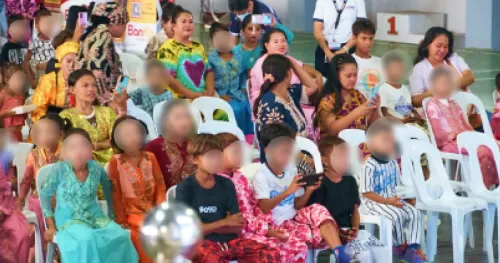
The event brought together 153 Sama-Bajau beneficiaries of the Pantawid Pamilyang Pilipino Program (4Ps) from Barangays Dalahican and Barra in Lucena City.
The program combined cultural appreciation, educational discussions, and access to government services.
Vice President for External Relations Celso Jaballa welcomed the participants, followed by messages from DSWD Regional Indigenous Peoples Focal Person Junios Bien Manalo and National Commission on Indigenous Peoples (NCIP) Region IV-A Officer-in-Charge Fil Vincent Garcia.
The activity included learning sessions conducted by MSEUF faculty members.
College of Arts and Sciences faculty member Pedro Jose De Castro shared research concerning Indigenous Peoples' ways of life, while College of Nursing instructor Rolando Remojo discussed health and nutrition, including personal hygiene and waste management.
These activities provided educational information relevant to Indigenous community welfare, cultural understanding, and health awareness.
Supporting community access to essential government services
A major component of SAMA-SAYA was its Service Caravan, which brought together government agencies to assist participating community members.
The City Health Office, Philippine Statistics Authority, PhilHealth, and DSWD provided services that included medical consultations, birth registration assistance, and social welfare support.
The activity also featured traditional music and dance performances that provided opportunities for Sama-Bajau participants to present aspects of their cultural identity.
Through this collaboration, MSEUF supported government efforts to extend services and educational activities to a community experiencing social and economic challenges.
The documented participation of 153 beneficiaries demonstrated the reach of the event, although the available report did not specify how many individuals received each type of government service.
The program established direct community engagement and cooperation with government agencies. However, its documented educational sessions primarily served community beneficiaries rather than policymakers or lawmakers.
Connecting academic expertise with governance and community development
MSEUF's documented initiatives in 2025 illustrated how academic research and community engagement can contribute knowledge relevant to public institutions.
The Talaba eco-park study produced recommendations intended for policymakers and decision-makers involved in sustainable tourism development.
The CHR conference presentation addressed a government security initiative and its impact on selected municipalities in Quezon Province.
Meanwhile, SAMA-SAYA connected academic researchers, government representatives, and community beneficiaries through educational discussions and public service activities.
These initiatives demonstrated different forms of knowledge sharing and institutional collaboration.
Their potential contributions to government decision-making can be further established through records of policy briefings, technical presentations, capacity-building sessions, or formal consultations involving government policymakers and lawmakers.
 |
 |
 |
 |