


Manuel S. Enverga University Foundation (MSEUF) advanced its commitment to achieving carbon neutrality by 2040 through greenhouse gas emissions accounting aligned with the Greenhouse Gas Protocol, renewable energy investments, and campus energy management initiatives in 2025, building on its earlier sustainability advocacy and formal institutional climate commitments.
Establishing a carbon neutrality target for 2040
On March 8, 2024, MSEUF publicly declared its commitment to become a carbon-neutral university by 2040, establishing a time-bound institutional target for reducing greenhouse gas emissions across its operations.
The commitment follows the Greenhouse Gas Protocol, an internationally recognized framework for accounting and reporting organizational greenhouse gas emissions.
The University's declared carbon neutrality target covers Scope 1, Scope 2, and material categories of Scope 3 emissions, reflecting its intention to address direct and indirect greenhouse gas emissions.
The scope coverage includes:
-
Scope 1 – Direct emissions: Emissions from sources owned or controlled by the University, including applicable fuel combustion and University-operated vehicles.
-
Scope 2 – Indirect energy emissions: Emissions associated with purchased electricity consumed across University operations.
-
Scope 3 – Other indirect emissions (partial coverage): Material emissions categories associated with procurement, transportation, commuting, and other applicable activities beyond the University's direct operational control.
MSEUF's commitment identifies partial Scope 3 coverage rather than all 15 categories under the GHG Protocol.
Building a culture of sustainability through campus engagement
The University's climate action efforts also draw on earlier initiatives promoting environmental responsibility among students, faculty, and the wider campus community.
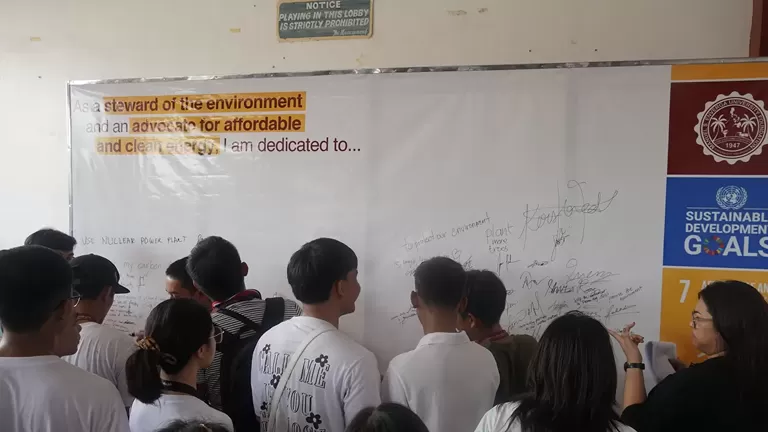
On June 23, 2023, MSEUF established a Commitment Wall at the University Gymnasium to encourage public pledges toward renewable energy adoption, energy conservation, and sustainable practices.
The initiative engaged students, faculty, and campus visitors in recognizing their responsibilities toward environmental protection and responsible energy consumption.
Through this activity, MSEUF promoted awareness and participation in sustainability, supporting a campus culture that complements its subsequent institutional carbon neutrality commitment.
 |
 |
 |
 |
Implementing a phased decarbonization strategy
Following its formal 2040 commitment, MSEUF outlined a decarbonization approach anchored on four strategic priorities:
-
Greenhouse gas emissions measurement and disclosure following GHG Protocol standards.
-
Improved energy efficiency in buildings and University operations.
-
Expansion of renewable energy generation and procurement.
-
Responsible management of residual greenhouse gas emissions.
The University's published framework identifies annual greenhouse gas inventories, energy audits, phased decarbonization planning, and sustainability reporting as mechanisms for tracking progress toward its carbon neutrality target.
It also prioritizes reducing electricity consumption, expanding solar energy generation, improving transportation and commuting practices, and promoting low-carbon procurement.
Advancing renewable energy adoption and reducing dependence on purchased electricity
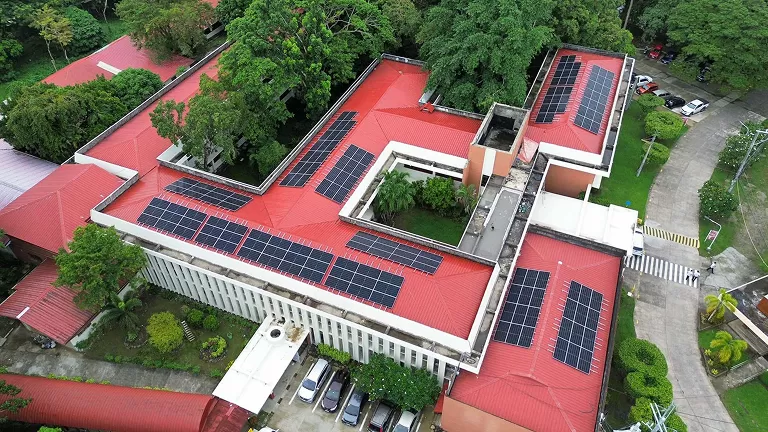
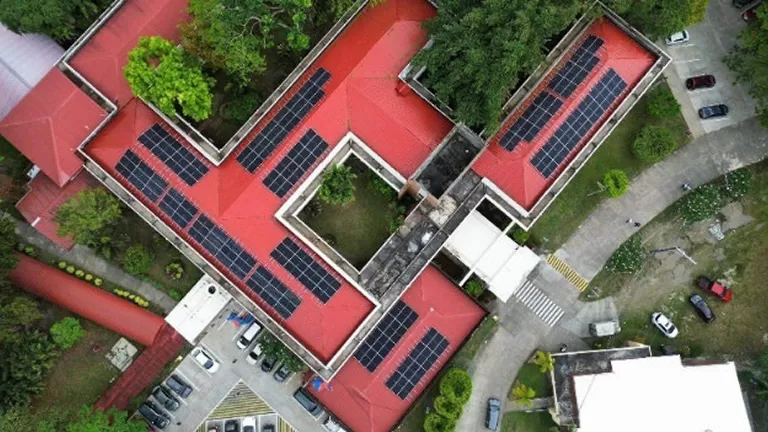
In 2024, MSEUF installed a 99.37-kilowatt-peak (kWp) grid-tied solar photovoltaic system at the Commerce, Engineering and Technology (CET) Building as part of its Green Initiatives program.
The installation formed part of the University's strategy to reduce reliance on purchased electricity and progressively address Scope 2 greenhouse gas emissions.
 |
 |
 |
 |
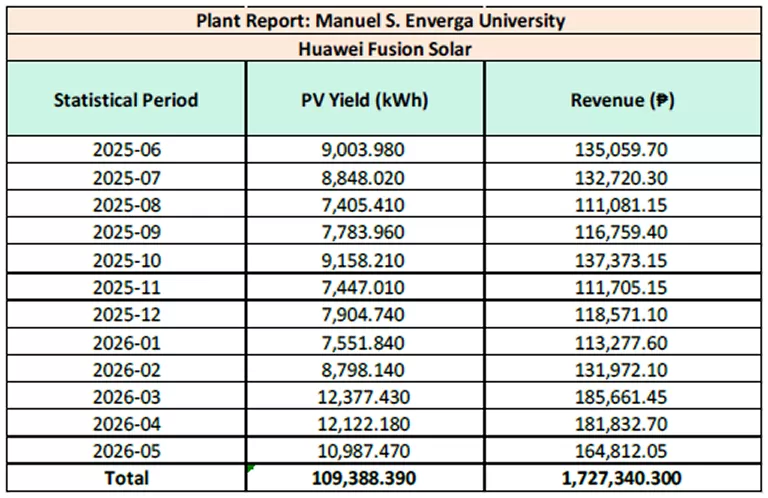
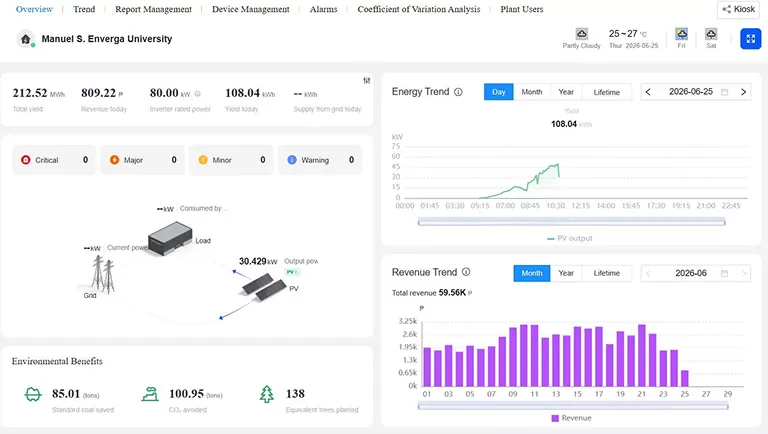
In 2025, MSEUF monitored solar electricity generation through Huawei's FusionSolar platform.
Available monitoring records documented 57,551.33 kilowatt-hours (kWh) of solar electricity generation from June to December 2025.
These records demonstrate the University's operational use of renewable energy infrastructure and provide measurable activity data for monitoring progress toward its long-term emissions reduction objectives.
 |
 |
Strengthening greenhouse gas accounting through energy consumption monitoring
Alongside its renewable energy initiatives, MSEUF maintained institutional electricity consumption records to support its greenhouse gas accounting framework.
Official utility billing statements and University accounting records documented 2,072,616 kWh of purchased electricity consumption in calendar year 2025.
These records provide documented activity data that can support the calculation of electricity-related greenhouse gas emissions under Scope 2 of the GHG Protocol.
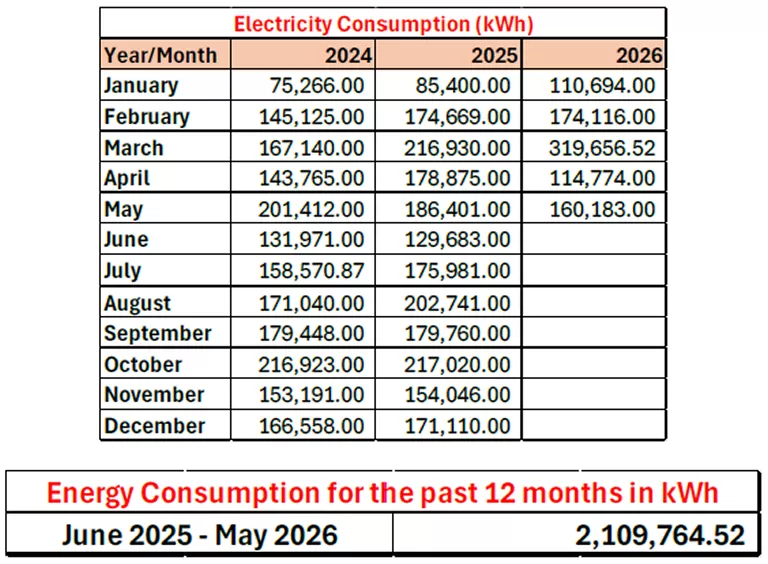 |
Together with renewable electricity generation records, this information strengthens the University's foundation for energy assessments, future emissions inventories, and monitoring of its carbon neutrality commitment.
These electricity records constitute activity data rather than a completed or independently verified greenhouse gas inventory.
Sustaining institutional accountability toward carbon neutrality
MSEUF's 2040 carbon neutrality commitment establishes a long-term direction for reducing greenhouse gas emissions through measurement, energy efficiency, renewable energy adoption, and progressive operational improvements.
The University's sustainability advocacy in 2023, formal carbon neutrality declaration in 2024, and documented energy management activities in 2025 demonstrate the development of its institutional approach to climate action.
Through its time-bound commitment covering Scope 1, Scope 2, and material Scope 3 categories, MSEUF continues to strengthen the foundation for greenhouse gas accountability and long-term decarbonization.