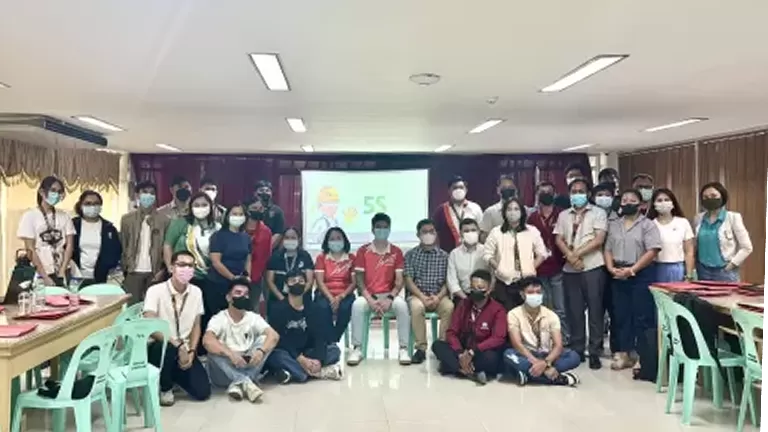


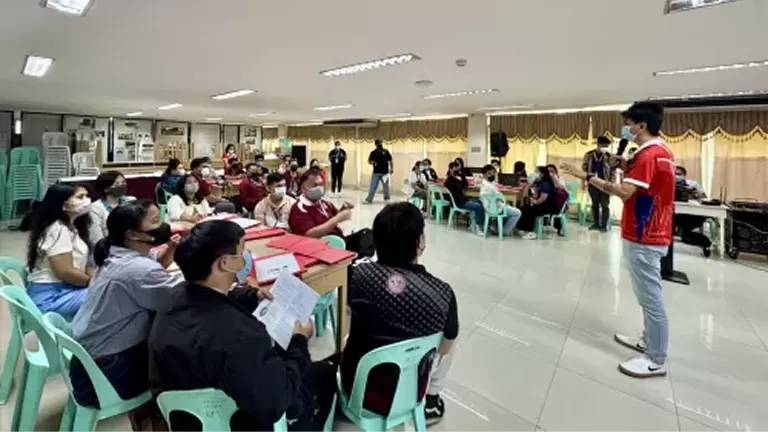
Manuel S. Enverga University Foundation (MSEUF), through its Sustainability Department, participated in the two-day Orientation and Workshop on Climate Risk Assessment for Resilience Road Mapping and Investment Planning, which began Oct. 14, 2025, at Queen Margarette Hotel in Lucena City, to engage with government and development stakeholders on climate risk assessment and disaster resilience planning.
Josh Marinas, MSEUF health and safety officer, represented the University on behalf of Sustainability Department Head Arby Lagman.
The activity introduced the Provincial Climate Risk Diagnostics (PCRD) methodology, which helps provinces identify critical climate risks and prioritize investments to strengthen the resilience of vulnerable communities.
Strengthening climate disaster preparedness through government engagement
During the workshop, resource speakers from the Department of Environment and Natural Resources Climate Change Service (DENR-CCS) and the United Nations Human Settlements Programme (UN-Habitat) discussed the Risk Resiliency Program framework, climate risk assessment processes and the integration of nature-based solutions into local development planning.
The discussions emphasized the importance of institutional coordination, prioritization of climate-related investments and regular updating of climate risk data to support evidence-based decisions.
These approaches support provincial efforts to better understand climate-related threats, guide disaster risk reduction measures and strengthen long-term community resilience.
Sharing the University's Climate Action Plan
As part of the activity, MSEUF shared its University Climate Action Plan with the assembly, connecting its institutional environmental initiatives with broader discussions on climate risk management and resilience.
The presentation highlighted the importance of engagement between higher education institutions and government stakeholders in addressing climate-related challenges.
Through this exchange, the University contributed its institutional perspective to a forum focused on strengthening climate preparedness and identifying approaches to community resilience.
 |
 |
 |
 |
Supporting collaborative climate action
MSEUF's participation reflects its continued engagement in initiatives that bring together government agencies, development organizations and higher education institutions to address climate risks.
By joining discussions on provincial climate risk diagnostics, resilience road mapping and investment planning, the University strengthened its understanding of government-led approaches to climate adaptation and disaster preparedness.
The activity also reinforced the value of institutional cooperation in responding to climate-related challenges and supporting the development of safer, more resilient communities.