


Manuel S. Enverga University Foundation (MSEUF) continues to strengthen its digital infrastructure and technology-supported learning environment through the use of online collaboration platforms, learning management systems, and professional development initiatives.
Through its educational technology resources and the IT Center for Continuing Education (ITCCE), the University provides digital tools that support communication, academic coordination, instructional activities, and professional skills development.
These initiatives reflect MSEUF's commitment to technological innovation and the development of a digitally capable university community.
Strengthening institutional collaboration through digital platforms
MSEUF maintains a range of educational technology platforms that support communication, collaboration, and the management of academic activities.
The University's documented digital resources include NEO Learning Management System (LMS), Microsoft Teams, and Microsoft OneDrive integrations.
These technologies provide opportunities for academic personnel and students to communicate, coordinate learning activities, share documents, and collaborate through online environments.
Microsoft Teams supports virtual meetings and communication, while OneDrive provides cloud-based access to documents and shared files.
Through the integration of these platforms, MSEUF supports digital interaction and academic coordination across different University activities.
The availability of these tools demonstrates the University's technological capacity to support certain activities without requiring every interaction to take place in a traditional physical meeting environment.
However, the existence of digital collaboration tools does not, by itself, establish an approved remote-working arrangement for University employees.
Developing digital competencies through educational technology
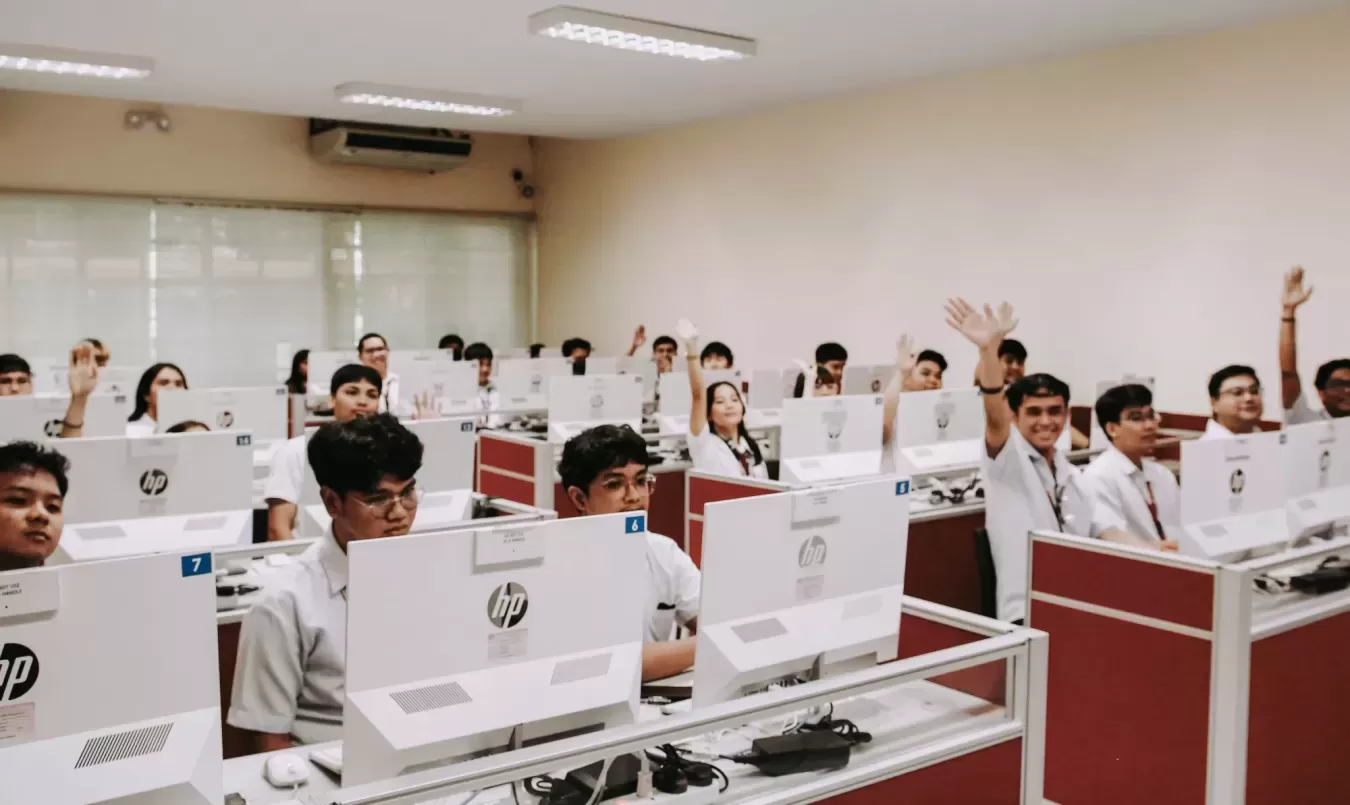
MSEUF also provides specialized digital learning resources to strengthen the technical competencies of students and academic personnel.
These include CodeChum, Oracle Academy, Cisco Networking Academy, and Huawei Uniportal.
The platforms offer learning opportunities involving programming, networking, information technology, and other industry-relevant competencies.
By incorporating digital technologies into its educational environment, the University supports the development of technical knowledge and skills relevant to contemporary professional practice.
These resources also contribute to the University's efforts to strengthen technological readiness and digital literacy.
Expanding professional development through the IT Center for Continuing Education
The IT Center for Continuing Education (ITCCE), managed by the College of Computing and Multimedia Studies (CCMS), provides short courses and professional development opportunities in information technology and related fields.
The University's documented training areas include mobile and game development, Cisco Certified Network Associate (CCNA) training, animation, web design and development, Arduino programming, and graphics and desktop publishing.
The Center provides laboratory-based instruction, learning modules, and certification opportunities designed to strengthen participants' technical competencies.
The ITCCE also collaborates with student and professional organizations, including the Philippine Society of Information Technology Educators (PSITE)–MSEUF Chapter, in support of educational and community extension activities.
These initiatives demonstrate the University's investment in digital capacity-building and continuing education.
Supporting technology-enabled institutional practices
The University's digital platforms provide infrastructure that can support online coordination, virtual meetings, and access to shared resources.
Such technologies may be useful in implementing flexible working arrangements when supported by approved institutional policies and operational procedures.
Remote working and telecommuting can reduce the need for employees to travel to campus for certain work-related activities, potentially contributing to more sustainable commuting practices.
However, the University's existing digital capacity documentation does not establish whether MSEUF formally authorized employees to work remotely, permitted telecommuting as a standard practice, or implemented a condensed working week during 2025.
Further documentation is necessary to determine whether the University's digital infrastructure formed part of an institutional remote-working arrangement.
 |